Last Updated 1-14-08
<-CHM-130 Home Page
Syllabus for CHM-130: Fundamental Chemistry
Textbook: "Foundations of College Chemistry"
Authors: Hein and Arena
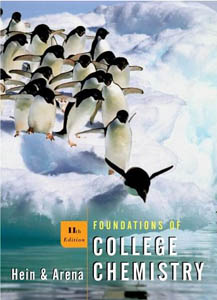
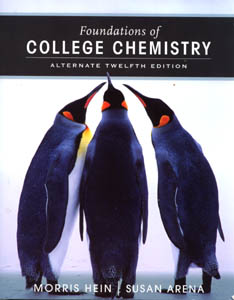
Two editions to choose from. The 12th Edition is in bookstore and the 11th Edition is found online but is usually much cheaper. Contact instructor for details on where to purchase 11th Edition.

Phoenix College (online course)
(#32205/Fall 2008)
Ken Costello, Instructor
chm130@chemistryland.com
480 202-2993 (cellphone #)
11th Edition
Alternate 12th Edition
Online Tutorials: Author: Ken Costello
Textbook 11th edition

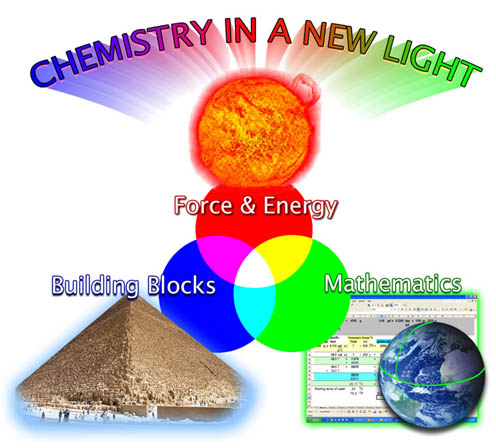
Chemistry 3 light logo


Evolution of Chemistry

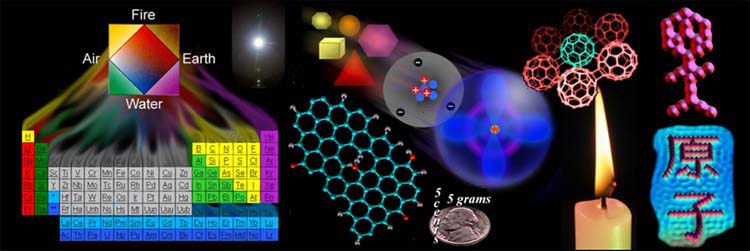
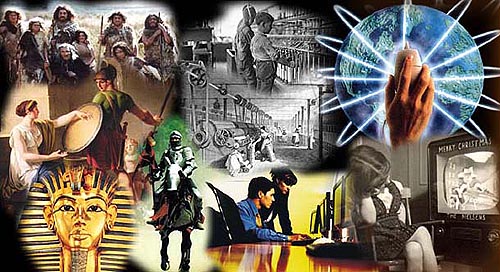
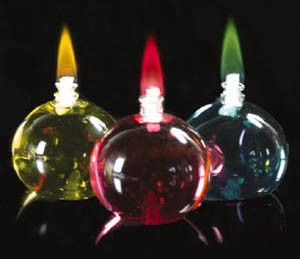
The images shown above represent the evolution of chemistry. For example, on the left the four imagined elements were fire, air, earth, and water. We now recognize 114 elements, with my favorite being element 111 presently called unununium. The other images represent other milestones that will get covered as well.

Chemistry is a vast subject that encompasses...

The mysteries of the universe...
   The makeup of the Earth...
      The natural and unnatural chemicals in the environment...

The products you buy ...
  And the foods you eat...

Things too far away to see...
   Things that are only seen through a microscope...
      And things so small that they will never be seen.

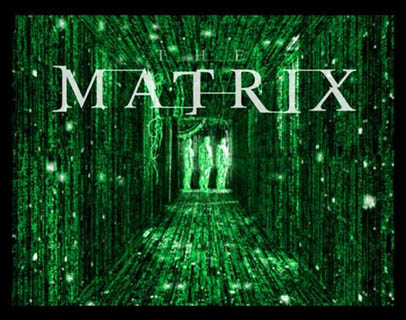
In other words, chemistry is more than you or I could ever know, but fortunately learning the fundamentals of chemistry is possible. But don't let the word, "fundamental" fool you. In this course you will learn that the world is very different than you thought it was. In some ways stranger than Hollywood’s virtual world called the Matrix. After learning chemistry you will look at the world differently just as Neo did in the movie.

Things you should expect to get out of this course
1. Gain an appreciation of chemistry: its value to society, its role in history, the effort to get this far, the modern marvels.

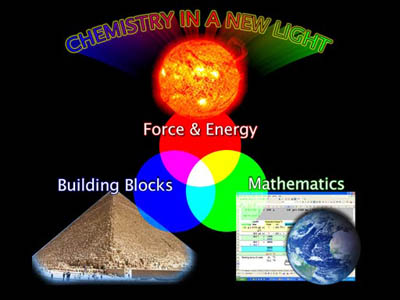
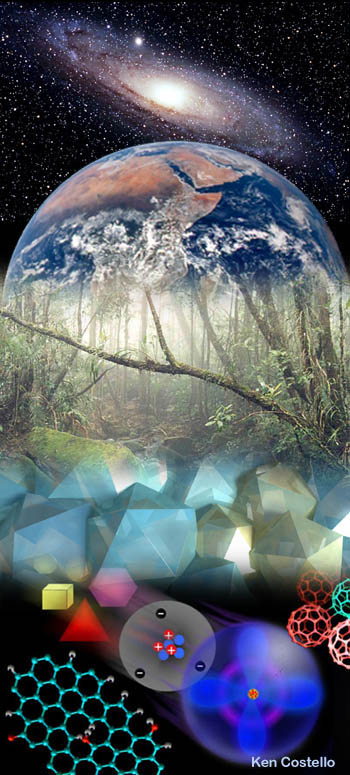
2. Learn how to approach a chemistry topic as a blend of bluilding blocks, force & energy, and mathematics. Chemistry can seem like a long list of separate concepts but this approach ties them together. Also, dividing a chemistry topic into three areas of focus makes it easier to understand.
• The building blocks focus sees chemicals coming from simpler building blocks.
* Chemistry also involves force and energy. For example, attraction and repulsion of + & - charges guide the assembly of atoms and compounds.
* The third part of chemistry involves mathematics. The Earth represents the Metric system which is based on Earth measurements and water.

Chapters in the textbook and tutorials are some blend of these three focus areas.

3. Become a smart consumer of chemical products: Better understanding of labels, smarter at reading past the hype or paranoia, and better at recognizing pseudoscience.

4. Be better prepared to move on to other levels of chemistry or other fields in science.

This preparation involves solidifying the fundamental concepts of chemistry. Remember chemistry is not an abstract science. It is you and everything around you. Don't let it become a bunch of symbols like those on the Periodic Table.

The other preparation is the ability to measure and calculate the quantities needed. So math fundamentals are just as important.


COURSE COMPETENCIES

The official course competencies are listed on this district Web page:
http://www.maricopa.edu/curriculum/

I will cover these competencies in the course but weave them into the topics listed on home page. I don't list them here because they are a little overwhelming to see all together. Also, a list of competencies makes chemistry seems boring, which it isn't. I have also added a few more competencies that will help you be a smarter consumer and smarter chemistry student.


TESTING
As you might guess, giving or taking tests in distance learning classes is always more difficult than in traditional classes. In some distance learning classes, students take tests online. In other distance learning classes, students are required to come to the college testing center for testing. I believe that a distance learning class should be done all at a distance if the student so desires. However, many instructors are concerned that if a student takes tests only over the Internet, there's no checking to see if that student is doing the test by him or herself or getting help from their chemistry-smart friend. At some point in the future where we all have Web cameras and a fingerprint input device, then these fears will go away.
For now I would like to give tests in a two ways to better guarantee a student's progress and reduce or eliminate any traveling a student may have to do. One way is online; the other is orally (on the phone). I like to test comprehension frequently rather than waiting for a major test. Some tutorials will have a quiz that immediately follows it. Quizzes not only test what was learned but have some extra activities to test your ability to learn more. There are several quizzes and assignments plus three major tests, and the final. All quizzes are done online. The tests will be a mixture of online testing and oral (over the phone) testing. The quizzes, tests, and assignments count for 80% of your grade. The final is 20%.
I always offer students chances to redo questions or assignments. My goal is that you learn the material. If you restudy and do problems over again, I'm happy to regrade it. I usually push students to get 100% on their quizzes, and assignments even if it takes a few tries.
CHECKING PROGRESS: On the home page you will see a link to "CHECK PROGRESS". The progress page is a table (like one below) where you can see what assignments I have received and if there's any questions that need to be redone. If I say "Sent 3-2" that means you sent it on March 2nd, but I haven't graded it yet. If I write "Done," then it means you got 100%. If a question is missed, I will say "Redo" followed by the question number. Also, instead of your name listed on the progress sheet, I will give you a code name using the name of an element.

Status Page

DEADLINES VS. TARGET DATES: Even though I do not have strict due dates, I do have target dates that give you a pacing that spreads out the learning. I like the course to be flexible to accomodate unforeseen circumstances or irregular schedules. However, if you get too far behind, I will prod you to catch up. If you do not communicate with me and are far behind, I have to drop you from the course.

All Maricopa Community College students are expected to be familiar with the Student Guide that explains the policies, procedures, and resources for students. A link to the home page for the Student Guides is below.
http://www.maricopa.edu/legal/student/conduct.php
Besides student responsibilities, it has a wealth of other information, also.
If you have any special learning needs let me know. The web page has information on that as well.

In summary, I think this class is very valuable and enjoyable at the same time. It's important to be aware of what the world is made of, and at the same time, this awareness is like traveling to new places and seeing things you didn't know existed.

Welcome to Fundamental Chemistry. Now, dive in and see what's there.

<-CHM-130 Home Page