|
Chemistry & Society (class 26418/Spring 2009) |
|
|
|
|
|
|
|
chm107cgc@chemistryland.com (480) 202-2993 |
|
|
"Chemistry & Society: Magician & Audience" Author: Ken Costello |
|
Chemistry & Society (class 26418/Spring 2009) |
|
|
|
|
|
|
|
chm107cgc@chemistryland.com (480) 202-2993 |
|
|
"Chemistry & Society: Magician & Audience" Author: Ken Costello |
| The syllabus provides a basic outline for the course and other important information. Some changes to syllabus may be necessary as semester progresses. Instructor will notify you of any changes. |
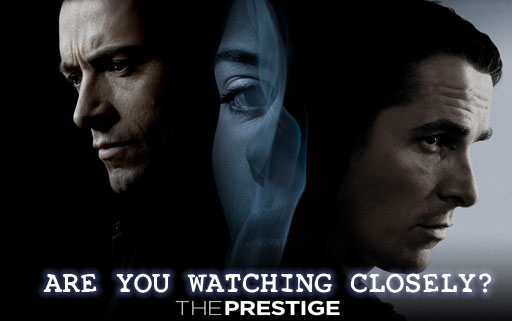
| Chemistry & Society: Magician & Audience In this class you will learn how chemistry has played a vital role in the survival of the human race. Unfortunately, in the process of doing good, chemistry has also done some harm. Society often allows these negative consequences because it focuses on the product or the results and not much on what happens before or after the result. I equate society's attention to that of the audience at a magic show. They love the tricks and performance (results) but rarely investigate what happened before or after the performance. For example, the images on the right are from the movie "The Prestige." It's the scene with the disappearing "Bird in a Cage" trick. Click the lower left arrow to move through the images and to read the captions. Now that you know the trick, would you respond the same way to the trick? By the way, these cruel bird cages are still sold at some magic shops. |
 |
|
AS MAGICIAN, KNOW
YOUR AUDIENCE
As an example, we know society has the below traits. • We are a society who loves to be mobile and dislikes traffic jams. |
 |
|
UNVEIL WHAT THE AUDIENCE WANTS Civil engineers equipped with the chemistry of cement, steel, and asphalt unveil an impressive system of freeways. |

|
|
AUDIENCE REACTS ACCORDINGLY Drivers feel relieved when a new stretch of freeway speeds up their time on the road. |
 |
|
PLAY DOWN THE HISTORY The magician never talks about how a trick was setup. In our example, the civil engineers are likely to play down the history as well. The audience never investigates or soon forgets the following.
|

|
|
PLAY DOWN THE FUTURE
The magician doesn't talk about what is done after the magic show. The audience doesn't ask either. In our freeway example, the future played down is: • The traffic relief from a new freeway may be brief. (I remember a freeway section in my town had a traffic jam the very next day. So it began as insufficient. I also remember freeways next to me getting finished but were torn up in less than a year to be rebuilt because they were inadequate. That happened repeatedly. • The increased flow of cars will contribute to noise and pollution around the freeways. |
 |
| Problems in our
society are directly related to corporations, businesses, people,
and government unveiling what we want
with little attention given to the history
or future of what is being unveiled. • For example, we are all presented with vehicles that promise driving pleasure. We don't want to think about the poor working conditions of the workers who built it or the pollution that the manufacturer committed while building it (history). We don't want to think about speeding tickets or the poor gas mileage (future). In other words, we only want to focus on the pleasure of that unveiling, and if we do think of its history or future, we just want to dwell on the positive aspects. |
 |
| • The key to
solving society's problems requires us to examine the history
and future of the solutions that get presented to us. This is
true whether it is chemistry related or not. We also need to have a fundamental
understanding of the issues surrounding the solution. • Know the audience: For example, let's say a city knows its citizens have old computers that need disposed of and the people would be happy with a recycling program for their old computers The city makes a deal with a recycling company and unveils a new recycling program for old computers. People's reactions are positive because they dislike the thought of filling up landfills with them and like the idea of recycling. •Know the future: Ask how these computers are to be recycled. In some cases old computers are shipped to China where whole villages are poisoned by rudimentary efforts to recycle some of the valuable metals. For story visit China's hi-tech toxics • Know the history: Computer manufacturers have known for years the toxicity of their products and have dragged their feet in offering any recycling of their own products. • Do your homework: Know something about the the chemistry involved. In other words, know what these magicians know. • Push for Real Solution: By knowing history and future and the science involved, people can better judge the unveiled solution, and, if necessary, push for a real solution. |
 |
| Society is always trying to find solutions.
When one is presented, we tend to jump on it without too
much investigation. That causes problems.
We will analyze the impact of chemistry throughout history and modern times using the following steps. |
| 1. What did people want that chemistry could solve?
2. What was presented (unveiled) as the solution to the problem? 3. What were the future consequences both positive and negative of the solution? 4. What was the history behind the solution both positive and negative? 5. What chemistry principles need to be learned to better understand steps 1 through 4? |
|
One problem that society has been solved but causes the many environmental
problems we now face is the following.
|
|
| Problem
#1: Know your audience: Prices of products are too high and products in short supply. Societies want a multitude of products that are cheap and readily available. |
|
| Solution Presented:
Store shelves full of merchandise with many
inexpensive products. Go in any store and you always see the shelves fully stocked. The expansion of 99 cent stores prove how cheap products can be made. Buyers are thrilled with abundance of products at lower prices. In similar manner, Fast Food restaurants are everywhere and have also produce inexpensive food items (e.g., 99 cent menu). Buyers are happy to gobble up these cheap foods. |
|
| History: To satisfy the wants of society, companies shifted to mass production. Large tracts of land were required to build factories. Railroads, waterways, and highways capable of heavy freight transportation had to be built. Energy sources on a big scale had to be secured. Laborers had to be recruited from small businesses or farms. In other words, drastic changes to the profile of our society had to be made to accommodate mass production. |  |
Positive Impact on society: We are all materially very wealthy. Owning many more things than our ancestors ever dreamed of. Because of mass production of food products, we also have access to more food than our ancestors ever dreamed of.Mass produce everything in factories by using available chemical resources (oil, coal, gas, nuclear) for energy and readily available chemicals as starting materials. To keep prices low, keep productivity at maximum and avoid anything costly. Distribute products via vehicles that also consume chemical fuels. Consumers can also drive to stores to buy these products often. For agricultural products, also strive for maximum production using whatever chemicals supports production. |
 |
| Negative Impact on society (played down by manufacturers):
Non-renewable energy resources have dwindled. Burning of fuels to provide energy for factories has created air pollution and contributed to global warming. To cut costs, waste products from factories are not dealt with and therefore have contaminated our air, water, and soil. Mass produced foods have often been formulated to increase storage at the expense of nutrition. The distribution of products have also filled our highways and streets with trucks that also pollute our environment. The driving to stores also adds to pollution. The discarded products are filling landfills and taking away habitats of animals and plants. For maximum productivity, pesticides and fertilizers are used and have contributed to toxic chemicals in the environment. |

|
 |
Problem #2: Find raw materials that allow easier and faster production of manufactured goods. (This problem is related to problem 1) This material should allow for cheap, lightweight, waterproof, inert, and moldable products. |
 |
Solution Presented:
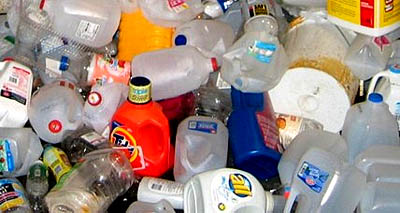
Plastics: Chaining together simple molecules allows the creation of a variety of materials known as polymers or plastics. These raw material primarily comes from petroleum. |
 |
History: Plastic is synthesized from petroleum products. So it contributes to the decline of that non-renewable resource. It also takes quite a bit of processing to convert petroleum into the gases that become the raw material to make plastics. |
 |
Positive impact on society: Plastics contribute to our material wealth. We own more things because they are cheaper to manufacture. Cars are lighter in weight and therefore produce less pollution. Our clothes are warmer, last longer, and are easier to care for. Things are cheap enough to be disposed of; eliminating cleaning and use of water and soap. Plastics are waterproof and are durable in all weather conditions. Plastic containers or bags take up less space at home or in the landfill. Some plastics can replace body parts. |
|
• Because of plastics' durability, they do not decompose easily in landfills or as litter. • When some types of plastics are burned, toxic gases are emitted. • Plastics are made from petroleum which means our current fuel for cars will run out sooner. |
| Problem #3:
Know your Audience: People want to be comfortable and they want their food to last longer. They also want it to be safe. Refrigeration was the answer, but early refrigeration units used ammonia, which was not safe. People and manufacturers wanted a gas that would make refrigeration safer. |
||
| Solution Presented to Society: Chlorofluorocarbons Combine a few chlorine atoms, fluorine atoms, and carbon atoms to make a variety of compounds called chlorofluorocarbons. |

|
|
 |
History: Before chlorofluorocarbons were invented, ammonia and sulfur dioxide were the common gases used in refrigeration. Ammonia and sulfur dioxide are quite dangerous, but chlorofluorocarbons are non-toxic and non-flammable. To demonstrate the safety of chlorofluorocarbons, the inventor, Thomas Midgley (left), would breath it in and then blow out a candle with that gas. | |
 |
Positive Impact on Society: The comfort of refrigeration was enjoyed in homes, cars, businesses, and elsewhere. This gas was also used to make refrigerators and freezers. Chlorofluorocarbons were also useful in spray cans, the making of Styrofoam and other foam-like plastics, fire extinguishers, cleaning solvents, and many other products that needed a non-flammable gas. In other words, it had a huge positive impact on society, which is why accepting its negative consequences has been so difficult. | |
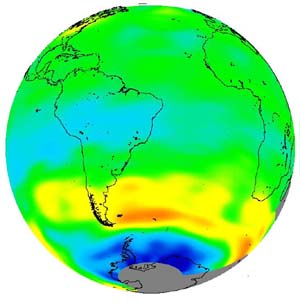
| Negative Impact on Society : The chlorofluorocarbons worked their way into the upper stratosphere and destroyed ozone, which blocks the sun's high energy ultraviolet light. Excess ultraviolet light damages skin, breaks DNA, causes skin cancer, damages eyes, kills plants, and causes many more problems. Life on Earth will cease to exist if too much UV light gets through the atmosphere. A hole in the ozone layer around the south pole has grown to 10 million square miles (twice the size of United Sates). |
 |
 |
|
COURSE COMPETENCIES |
|
|
The official course competencies are
listed on this district Web page: I will cover these competencies in the course but weave them into the topics covered above. I will also add a few more competencies that will help you be a smarter consumer and better steward of the environment. |
 |
COURSE EQUIVALENCY GUIDE |
|
CHM107 and CHM107LL are designed for non- science majors. It provides the natural science credit of SQ (Natural Science-Quantitative), SG (Natural Science-General), plus G (global awareness). This class is not for students going into nursing or other science fields. Science majors could take this class but later when they take CHM130 or higher, the CHM107 class would count only as an elective. For non-science majors this is a great class to get your science with lab credit. |
|
|
|
|
| As you might guess, giving or taking tests in distance learning classes is always more difficult than in traditional classes. In some distance learning classes, students take tests online. In other distance learning classes, students are required to come to the college testing center for testing. I believe that a distance learning class should be done all at a distance if the student so desires. However, many instructors are concerned that if a student takes tests only over the Internet, there's no checking to see if that student is doing the test by him or herself or getting help from their chemistry-smart friend. At some point in the future where we all have Web cameras and a fingerprint input device, then these fears will go away. | 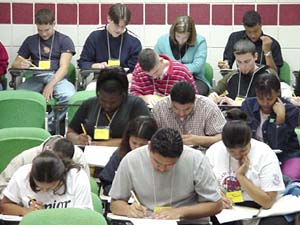 |
| For now I would like to give tests in a two ways to better guarantee a student's progress and reduce or eliminate any traveling a student may have to do. One way is online; the other is orally (on the phone). I like to test comprehension frequently rather than waiting for a major test. So I have a quiz after each tutorial. Quizzes not only test what was learned but have some extra activities to test your ability to learn more. There are about 20 quizzes/assignments and two major tests, the mid-term, and the final. They will be done partly online and partly oral. The quizzes/assignments count for 70% of your grade. The mid-term is 10% and the final is 20%. | 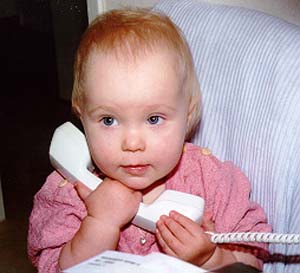 |
| I always offer students chances to redo questions or assignments. My goal is that you learn the material. If you restudy and do problems over again, I'm happy to regrade it. I usually push students to get 100% on their quizzes, and assignments even if it takes a few tries. | |
| On the home page you will see a link to "CHECK PROGRESS". The progress page is a table (see below) where you can see what assignments I have received and if there's any questions that need to be redone. If I say "Rec'd 10-2" that means it the email was dated October 2nd, but I haven't graded it yet. If I write "Done," then it means you got 100%. If a question is missed, I will say "Redo" followed by the question number. Also, instead of your name listed on the progress sheet, I will give you a code name using the name of an element. | |
|
|
|
| Even though I do not have strict due dates, I do have target dates (seen on progress page). I like the course to be flexible to accommodate unforeseen circumstances or irregular schedules. However, if you get too far behind, I will prod you to catch up. If you do not communicate with me and are far behind (4 labs behind), I may have to withdraw you from the course. | |
|
CGCC students are expected to be familiar with student responsibilities laid out in the CGCC Catalog and Student Handbook. A link to the catalog is here (It is 11.1 megabytes in PDF format).http://webport.cgc.maricopa.edu/published/...catalog... Besides student responsibilities, it has a wealth of other information, also. REFUND POLICY: Because students won't be able to get a refund 7 days after the class begins, I will withdraw students if I don't hear from them by Aug. 29th. That's to ensure they can get a refund. If they contact me after they get withdrawn and want to re-enroll in the class, I will try to give an override to let them back in. |
 |
|
SPECIAL LEARNING NEEDS: "Disability Resources and Services (DRS) provides services to students who qualify under the Americans with Disabilities Act and Section 504 of the Rehabilitation Act of 1973. Students must self identify to the DRS office, register, and provide required documentation of their disability. Reasonable accommodations can be provided to qualified students on an individual basis, review of supporting documentation, course selection, and individual assessment." |
|
| In summary, I think
this class is very valuable and enjoyable at the same time. It's important
to be aware of what's happening around you, and at the same time this
awareness is like traveling to new places seeing things you didn't know
existed.
Welcome to Chemistry & Society. Now, let's go exploring... |
 |