Before doing this quiz,
you may be better prepared if you do the tutorial for "What Happens
Behind the Scenes" first.
Copy each question below (highlight the text, then press the CTRL key
plus "c", or use the Edit menu at top and choose "Copy")
In your email program start composing an email and paste the questions
to your email (use CTRL-V to paste or use Edit
menu and choose "Paste"). Email your quiz answers to us
at chm107pc@chemistryland.com.
Note: Most questions in this quiz don't have a right or wrong answer, but if you are far off-base,
we will give some feedback to help you tackle the question again.


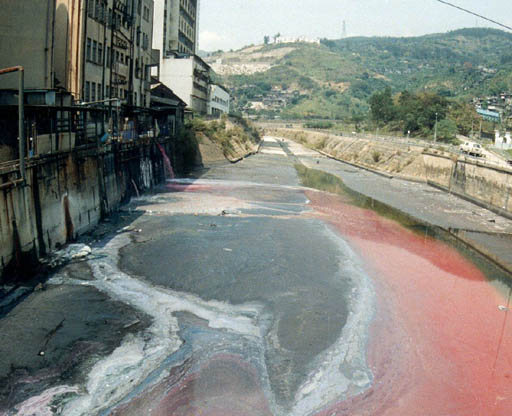
Question 6: Someone has released a huge amount of pollutant into the river and no one noticed where it came from. How do you think the polluter was able to hide its crime?
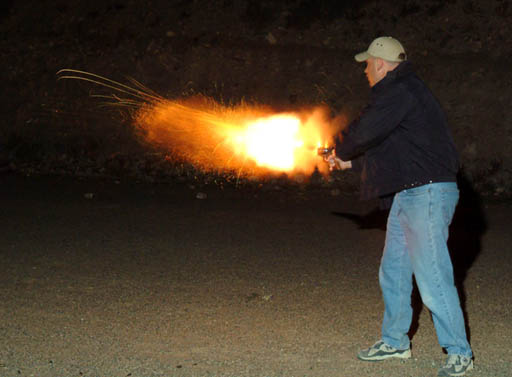
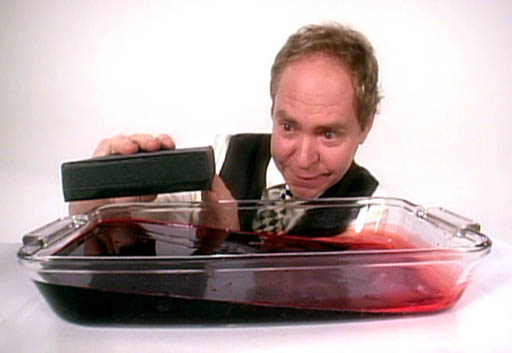
On the show, "B.S," with magicians Penn & Teller, they show how blood is attracted to a magnet. Every time Teller moved the big black magnet to one side or the other of the glass tray, the blood would be pulled towards it.
Question 9: Actually, blood is not attracted to a magnet despite the little bit of iron in blood, so how did they make it look like the blood was attracted to the magnet?
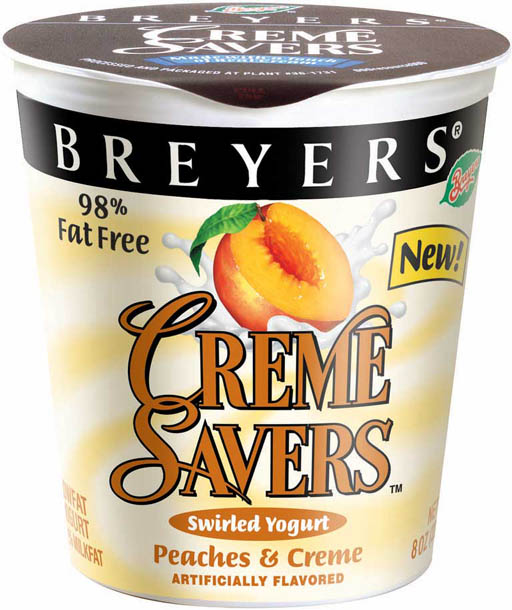
Question 10: This yogurt is called Peaches & Creme. (a) What do the graphics on the container imply regarding peaches in the yogurt?
(b) Which do you think it has in it, whole peaches, peach slices, peach pieces, peach juice, or none of these? (notice the label on the bottom of the container)
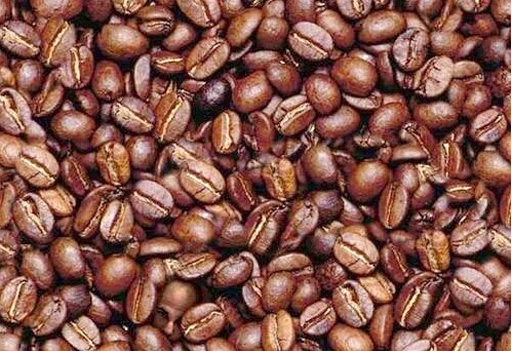
A good portion of the brain is dedicated to analyzing faces. As a result we try to see faces in anything that even remotely looks like a face. That's why we hear claims about seeing faces in so many things.
Question 11: A person's head and face is in this mix of coffee beans. Find it and tell me where it is. The task is difficult because we think we might see a face in every bean.
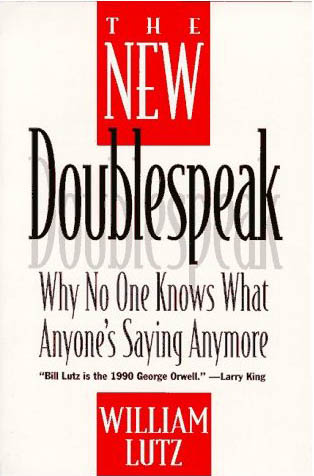
William Lutz, a professor of English at Rutgers University, wrote several books on doublespeak, which has these attributes:
- misleads
- distorts reality
- pretends to communicate
- makes the bad seem good
- avoids or shifts responsibility
- makes the negative appear positive
- creates a false verbal map of the world
- limits, conceals, corrupts, and prevents thought
- makes the unpleasant appear attractive or tolerable
- creates incongruity between reality and what is said or not said
Question 12: Give me three examples of doublespeak and explain why is it doublespeak (Don't use ones I mentioned in the tutorial.)
When we receive your answer via email, we will record it's been received on the progress sheet. (That's updated about once a day) After grading it, we will email your answers back with comments. If there are any missed, we will ask for you to redo them; that way you can get a hion every quiz.