In your email program start composing an email and paste the questions to your email (use CTRL-V to paste or use Edit menu and choose "Paste"). Send to chm107pc@gmail.com
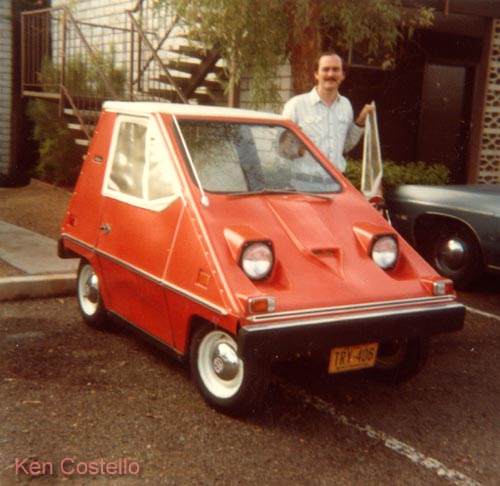
This is me back in the late 70's with my all electric "CityCar." It had a range of about 40 miles and a top speed of 40 mph. I use to drive it back and forth to the college where I taught. There was no where to plug in the car at the apartments where I lived, so I had to plug it in at the college.
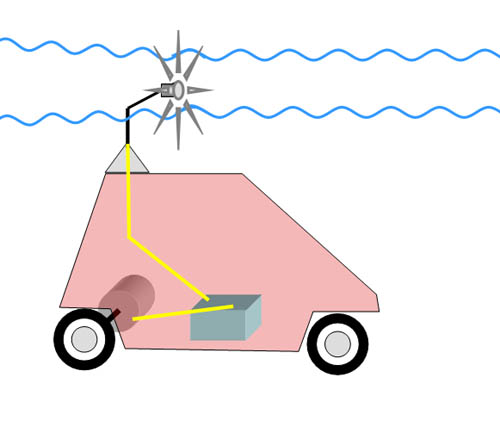
I had a few people ask why couldn't I install a wind generator on the top, so that as I drove, the wind could charge the battery. They said the car could just keep on going.
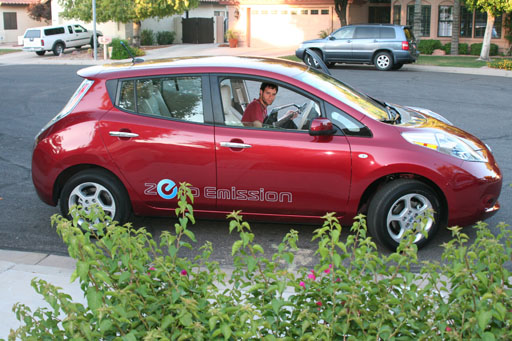
#2: Electric cars are now available. On the right is the all-electric Nissan Leaf that I bought in June 2011. It's a fun car to drive and very efficient with energy. Visit Edmunds.com and report the Pros and Cons.
http://www.edmunds.com/nissan/leaf/2012/
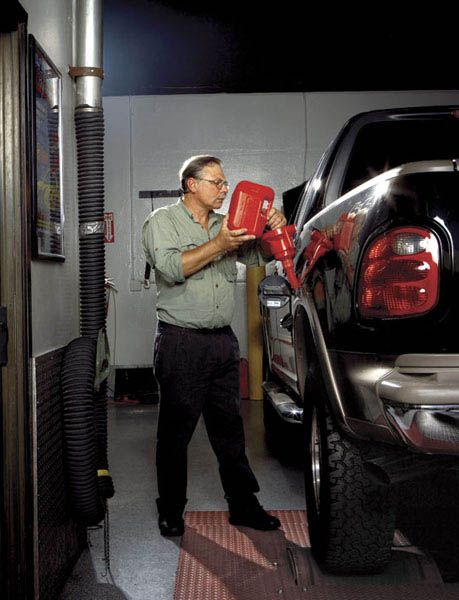
Scientific Skepticism Needed: As petroleum reserves go down and the price of gasoline goes up, there's going to be even more products on the market claiming to improve gas mileage. The cornerstone of chemistry and science is to test these claims. The magazine, Popular Mechanics, tested seven of the current products and their claims. There's also an article from The New York Times that talks about these bogus products. I've taken excerpts from these two online articles and placed them on the same Web page. Take a look at these articles on the link below and then answer the remaining questions.
http://www.chemistryland.com/...PopularMechanics/
Popular Mechanics Excerpt
(#3)What
do they claim magnets do to the gasoline?
(#4) What's the
problem with that claim?
(#5) How much
reduction to horsepower did these vortex generators cause?
New York Times article excerpt
(#6) The Federal Trade Commission has tested more than 100 products that claim they improve gas mileage and horsepower. What was the overall result?
(#7) The Environmental Protection Agency (EPA) makes sure the chemicals in gas additives do not produce an additional harmful emissions. If they do not produce additional harmful emissions, then the manufacturer gets a Registration Letter letting them know that their product passed. The letter doesn't mean the product works or is endorsed by the EPA. Not producing harmful emissions does not mean the product isn't harmful to the engine. It just means it's not harmful to the environment. Yet, what does the manufacturer put on their label?
(#8) Only 1% of gasoline is wasted in an automobile, yet companies make claims of 10% to 300% improvement in mileage. Those kind of improvements are impossible. However, people want to believe it is possible. So the success of these products is based not on the products performance but on the psychology of people. How would you sum up what the article says about people?
#10: A hair dryer requires a lot of power (watts).
10a) How many of these 200 watt solar panels would be required to run this 1000 watt hair dryer.
10b) How much would those panels cost?
10c) How many of these 13 watt compact fluorescent bulbs could be run with the same power needed to run a hair dryer?
